Showing posts with label Greece. Show all posts

Saturday, 9 April 2016

Ancient Greek Fashion - The Classical Period


Acropolis of Athens
This post focuses on the Classical period of Ancient Greece. This is the main period that people think of when asked to think about the Ancient Greeks and is the period during which Athens and Sparta were at their heights. The Classical period is generally classed as beginning around 479BC, or the end of the Persian war, and ending in 323BC, the point at which Alexander the Great invaded mainland Greece. During this period Athens was initially the most powerful city state, but after the Peloponnesian War, Sparta became the dominant power. Yet the culture of Athens continued to flourish and it is from this polis that the majority of our information comes from.

A caryatid from the Erechtheion in Athens wearing a peplos
The end of the Persian war saw a shift in Greek culture that highlighted the similarities of the Greek peoples compared to the ‘barbarian’ Persians. This was echoed in fashion, where elaborate styles of dress were rejected in favour of the more simple Spartan influence, perhaps as a way of demonstrating the strength of the Greek compared to Persian softness. 

Odysseus wearing the pilos hat, an exomis and a chlamys
As a part of this, the peplos returned to favour, having remained popular in much of Western Greece, as it was seen as a more ‘Greek’ garment. However, it did undergo some changes, now being made of a lighter woollen fabric as well as having a longer overfold.  The chiton also remained popular, and the two garments were sometimes worn together. More variation in both garments also began to occur, such as having two overfolds or the girdle also being wrapped over the shoulders; but the fabric itself remained plain, only sometimes having any form of pattern. 
Roman copy of Eirene and Plutos , wearing a peplos


Example of chiton sleeve detailing


Women continued to wear cloaks, called himations, seemingly every time they left the house. These himations would traditionally be wrapped over the shoulders as a shawl, but in this period also started being worn pinned over one shoulder, with the upper edge folded down. Himation is a general term used for Ancient Greek cloaks, however there were many different varieties, such as the chlanis which was made from particularly fine wool, or the fine xystis which was used for special occasions. 

Illustration of women wearing peplos and himations

Male fashion was much more similar to women’s fashion in the Classical period. For the chiton, men worn either a knee, or ankle length version, the latter being for the older men or religious ceremonies and was known as the chiton orthostadios or syrma. The peplos was also worn, but without the overfold. It could also only be pinned at the left shoulder, known as the exomis, a style which was typically worn by them lower classes.  Men could also wear short sleeved sewn tunics, similar to those of medieval Europe. The zoma, or loincloth was still also worn, again primarily by the lower classes. In more rural parts of Greece, animal skins were used to make clothing, such as the dipthera, a goat skin jerkin, although this was seen as primitive by the residents as cities such as Athens. 
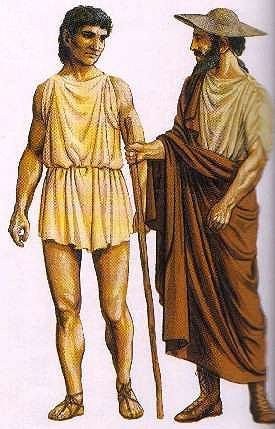
Illustration of a Spartan youth and a slave
Delphic Charioteer wearing an Ionic chiton
A statue of a man with a chiton
The fashion of the Classical period is similar to that of the Archaic period, fixing this style of dress in the minds of future generations. Whilst spheres such as art, architecture, philosophy and warfare underwent huge changes throughout this period, apart from some minor fluctuations, there was very little change in fashion.

Perseus, Medusa and Athena 460BC

 Eleanor


Pictures:

https://upload.wikimedia.org/wikipedia/commons/3/39/Caryatid-Erechtheum-British_Museum-3.jpg
https://commons.wikimedia.org/wiki/File:Eirene_Ploutos_Glyptothek_Munich_219_n1.jpg 
http://warhammer40kfanon.wikia.com/wiki/Sparta
https://en.wikipedia.org/wiki/Chiton_%28costume%29#/media/File:Young_man_exomis_Musei_Capitolini_MC892.jpg
https://en.wikipedia.org/wiki/Chiton_%28costume%29#/media/File:AurigaDelfi.jpg
https://en.wikipedia.org/wiki/Exomis#/media/File:Odysseus_Chiaramonti_Inv1901.jpg
http://www.fashion-era.com/ancient_costume/ancient-greek-fashion-hair.htm
www.vroma.org/images/mcmanus_images/sleeves.jpg
http://www.travelpage.gr/greece/Athens.htm
http://www.bbc.co.uk/schools/primaryhistory/ancient_greeks/gods_and_heroes/


Friday, 4 March 2016

Ancient Greek Fashion - The Archaic Period

Hebe, Dionysus, Leto and Chariclo at the
wedding of Peleus and Thetis, Athenian Black
Figure Dinos C6th B.C., British Museum

The Archaic period was a period of great turmoil and change in Greek history, which is why I find it so interesting. The city states of Athens and Sparta were gaining in power and influence, while the art was shifting its focus from the geometric and highly patterned to realism where the human body was concerned. Finally, at the end of the archaic period, the majority of the Greek city states united to defeat the significantly larger Persian army in the battles of Thermopylae and Salamis.

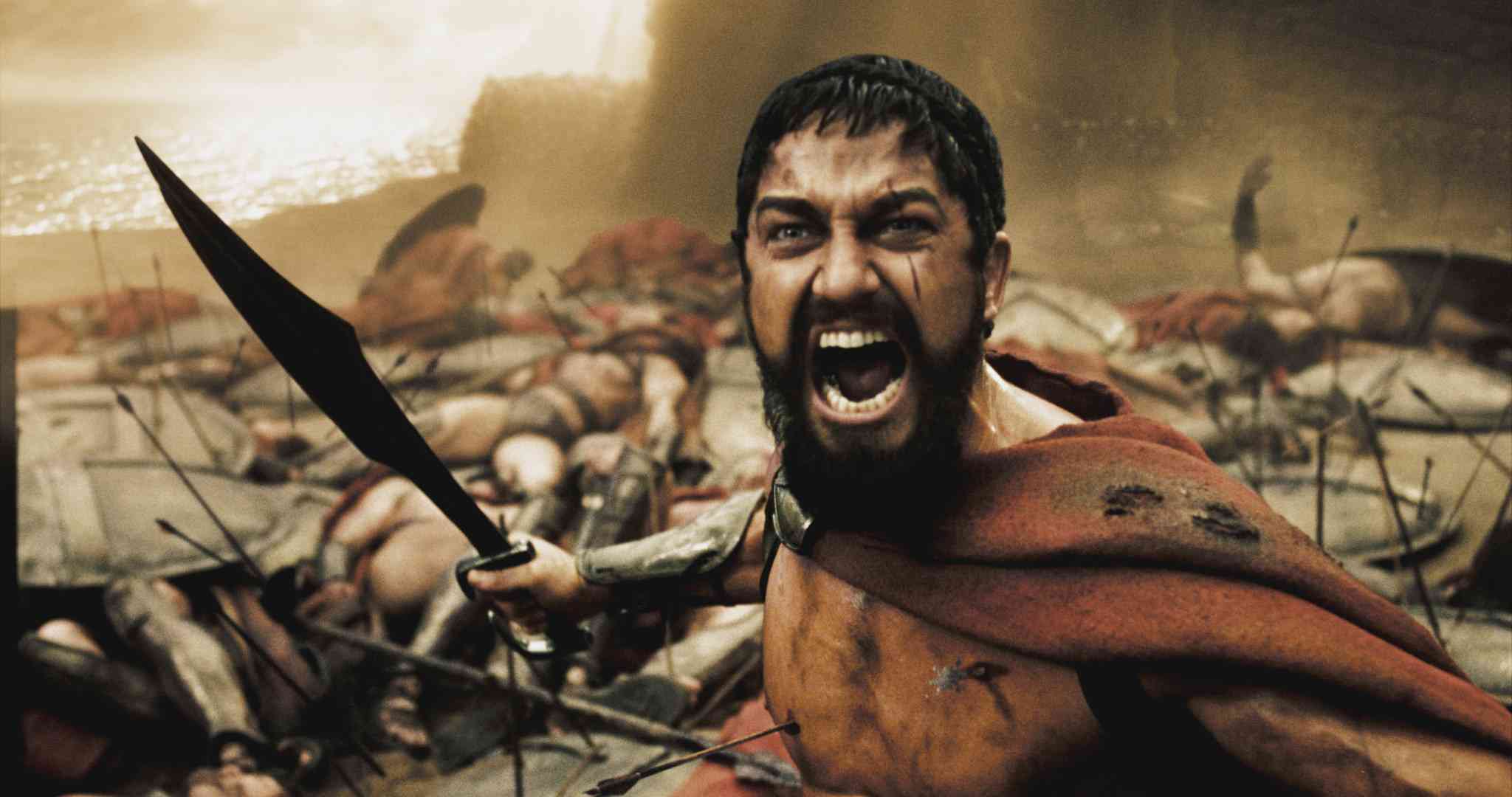
A totally accurate portrayal of Leonidas at the Battle of Thermopylae

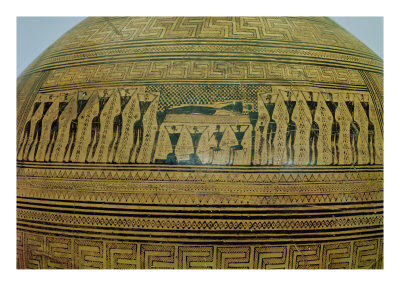
The period in Greek history between the C12th and C8thBC is known as the dark ages, due to the lack of writing to have survived, or seemingly been produced during this time period. Even the artwork became predominantly patterned and geometric during this period, allowing us no glimpse of the fashions of the day. Even by the C8th, the images we get are highly stylised and relatively simplistic. It isn’t until the C7th that we once again begin to find relatively realistic representations of the human form, allowing us to draw more detailed impressions of clothing.

The Dipylon Amphora, Funerary Urn in the Geometric Style from the mid-8th Century. About as useful as drawing a stick man in a fashion magazine


This period, from the end of the dark ages in the C8thBC until the Persian War in 479BC is known as the archaic period in Greek history. Here, some of the better known players of Greek history, namely Athens and Sparta, have come into play, as a couple of the many city states that are collectively referred to as the Greeks.

Significant changes had occurred to clothing by the beginning of the dark ages, with the fitted bodices being replaced with loose garments that were predominantly pinned onto the body.
 
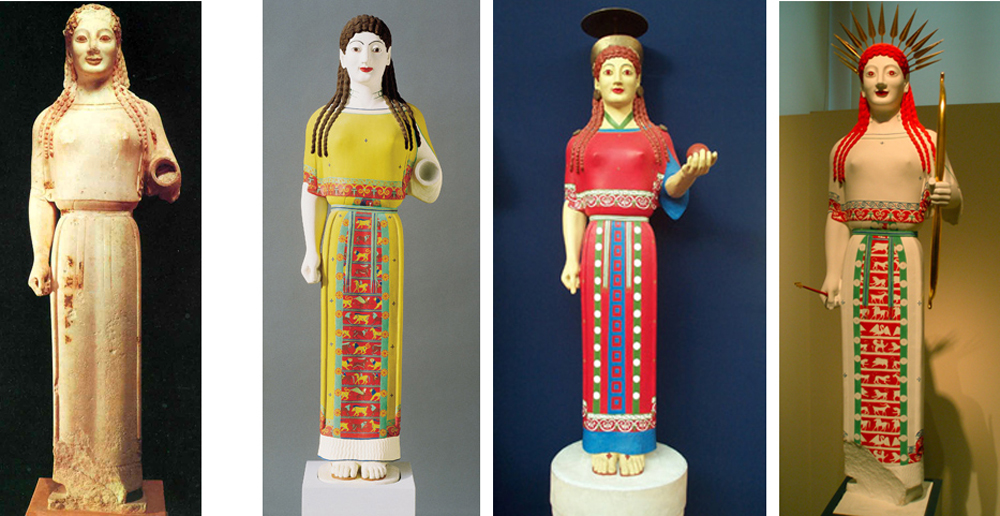
Peplos Kore (isn't she pretty) around 530BC, Acropolis museum, Athens

For women, the most fashionable garment in this period was the Peplos. This was a piece, generally of woollen cloth, that was wrapped around the body and pinned in place at the shoulders. To make it, a piece of cloth was folded in half, and the top was folded down, to create an overfold or apoptygma and then pinned in place at the shoulders. The open side could be sewn up, by often it was left open and the garment held in place by a girdle at the waist, which helped to take some of the weight off the pins.


Artemis, from the Francois Vase

The peplos has commonly been described as poikilos, or worked in many colours so it seems clear that the garment was a colourful and presumably patterned one. Indeed, on pottery, the peplos is most commonly seem covered in repeating geometric patterns that echo similar eastern designs such as those from Phoenicia. However, this was only for the rich, for the poorer members of society and slaves, the peplos would most likely been made from plain colours or undyed woollen cloth.


Some examples of the Peplos Kore restored to how she may have looked when she was colourful.

The peplos was teemed with a linen shawl referred to as a himation or a kredemnon, that was worn seemingly at the wearers discretion, being draped around the body and possible covering the arms, head or face.
The Berlin Standing Kore, 570-560 BC

Unlike the women, clothing for men appears to have consisted of a sown tunic, known as a chiton. This was a piece of cloth sewn into a tube and then pinned or sown over the arms, creating sleeves. The elderly and the wealthy wore ankle length chitons, while thigh length and belted was the predominant trend amongst those participating in physical activity. The majority of the time, a chiton was probably made of linen, but sometimes the warmer and cheaper wool would have been used.

Gorgon from dinos by the Gorgon painter, 600-550BC

Traditionally, men would also wear a cloak called either a himation or a chlaina, which was wrapped around the body, sometimes in place of a chiton. This cloak would have been woollen and was worn by all levels of society, although the quality of the materials varied drastically.
 

Achilles and Penthesilea, painted by Exekias, circa 540-30 B.C.

Another option for men was the zoma, or loincloth, that appears to have been worn primarily by athletes and warriors under their armour. Unfortunately, for the fashion minded, much of the art of this period aimed to depict the perfect man, to the ancient Greeks a young male athlete, who according to custom, would be naked.

The 'Gorgon Painter's Dinos' Pot design from Etruria c.580 BCE .

Overall, archaic fashion is very easy to achieve for yourself. All you need is a large rectangle of fabric, two reasonably large pin and a belt. The peplos and the chiton can be good costumes for parties (or re-enacting books of the Aeneid, while being wrapped in a bed sheet).  Although my love for this period does stem from my love for the art, I do like the fashion, especially the women's, even if I remain unconvinced that woollen cloth was the best thing to use in the climate of Ancient Greece.

 Eleanor


Pictures:


http://www.richardcrouse.ca//wp-content/uploads/2013/08/butler-leonidas-300-kopis.jpg
http://cache2.artprintimages.com/lrg/13/1347/QJES000Z.jpg