Showing posts with label Heather. Show all posts

Monday, 13 June 2016

Tutorial - 1920s-inspired hair and makeup

The image of the 1920s ‘flapper girl’ is iconic; we love the idea of the sequins, the feathers, the jazz, the parties… It’s also around the time when women started to wear makeup on a regular basis, as before this point, it was mainly worn by actresses and prostitutes. Makeup came back into fashion partly because of the improvement in the economy after the first world war, which meant that more companies were able to manufacture makeup in greater quantities. Another factor was that department stores such as Woolworths were becoming more prominent, meaning that it was easier for women to try and buy a wider variety of makeup. Third, films, and particularly magazines, made it possible for women to copy the makeup and styles of film stars, although they could only see the general shape and style of the makeup, and not the colour at this point.

I used various sources to try out a 1920s-inspired look on myself, and share the experience on this blog!

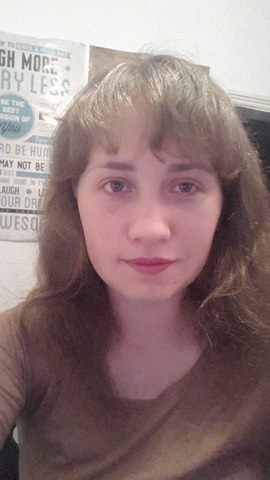
Here is my face and hair pre-makeover:


First, I applied foundation, concealer and powder. Complexion was an important aspect of beauty at the time, so an even base is crucial.


Rimmel Match Perfection foundation
Natural Collection CoverUp Cream concealer
Rimmel pressed powder


Dark, smoky eyeshadow was favoured in the '20s, so I applied the medium brown shade all over my eyelids, then applied the darkest brown shade at the outer corners of my eyelids. Finally, I applied brown eyeliner on my lower eyelids.


Revlon brown eyeshadow palette
Rimmel soft kohl eyeliner in Sable Brown


Then, I applied a thin line of black liquid eyeliner on my upper eyelids, with a small flick out to the side, and applied mascara to my upper and lower eyelashes.


Maybelline Great Lash mascara
Rimmel Exaggerate eyeliner in 003 Black


(I know this photo looks like I'm crying, 
but I just had a cold)


Finally, I applied a dark red lipstick; red was the most popular colour of lipstick at that time.


Rimmel Exaggerate lip liner in 024 Red Diva
Maybelline matte lipstick in 975 Divine Wine


To complete the look, I curled my hair using heated rollers.


I don't own one of the classic feathered headbands, but I tied a piece of black lace ribbon around my head, and pinned my hair around it to give the appearance of short hair, as this was fashionable at the time.
Here is the final (heavily filtered) version that ended up on my Instagram:


I hope you enjoyed this tutorial: I'm not an expert in hair or makeup, so it's a little slapdash, but I think it turned out quite well! 

Bibliography:
http://hair-and-makeup-artist.com/womens-1920s-makeup/
http://glamourdaze.com/history-of-makeup/1920s
http://www.artdecosociety.org/gatsby/f_hair-makeup.htm

Sunday, 20 March 2016

Fashion and beauty in the Italian Renaissance


As with my post on Medieval beauty, most of my knowledge of Renaissance style comes from pop culture, in this case the 2011-2013 series ‘The Borgias’. I’m going to attempt various types of braiding, including a style similar to that modelled by Lucrezia Borgia (well not the real one) above, as well as explaining some history and context behind the styles and fashions of this period.

The word ‘fashion’ didn’t begin to be used the way we use it now (i.e. the way styles of dress change over time) until the mid-sixteenth century; before this, ‘fashion’ referred mainly to the act of making things, or ‘fashioning’ them. This association had Biblical meaning, such as the references to God ‘fashioning’ people in the books of Job and Psalms.

In terms of what was considered ‘beautiful’, blonde, slender women with long necks and thin eyebrows were highly sought after. I actually did the ‘Are you a Renaissance beauty?’ quiz on the ‘Raucous Royals’ blog (linked below), and this was my result.

“Sheeesh…. You sure got hit with the 16th century ugly stick? Don’t worry. Perk up that Hapsburg chin and make sure to read the future post on Renaissance beauty secrets.”

Thanks.

Nevertheless, despite my aesthetic shortcomings, I will attempt to transform myself into something resembling the Renaissance definition of ‘beautiful’. Here goes.
The consensus seems to be that I need curled, blonde hair, either fully displayed or partially covered, possibly decorated with flowers and jewels. Obviously blonde is out, but I can probably find some jewels and flowers somewhere in my room…


To start with, the rope braid. I have watched a few YouTube tutorials, such as the two linked below, but as my hair isn’t quite long enough to braid all the way round my head, here is my take on it.
First, I parted my hair in the centre, split it into two halves and secured one half at the bottom of my scalp using a small bull clip, although a hair bobble would work just as well.
Next, I took a small section from the top of the loose half, and split that section into two. I crossed the two strands over, then added some hair to each section, and crossed them over again. I repeated this until I reached the nape of my neck, and secured it with a small bull clip. Then, I did the same with the other half of my hair.

Finally, I tied the loose ends of my hair into a bun!
This is the finished result – it’s by no means perfect, but this version did take several attempts, so please appreciate the effort that went in! It’s also quite a subtle style that you could easily wear in the modern age, which is a bonus!


Second, I’m going to try to imitate this hairstyle.


As I don’t have as much hair as is probably necessary for this style, mine is a slightly improvised version. It looks like the hair has been split into an upper and lower section, and the lower section has been plaited and wound round the head, and the upper section has been either plaited or rope-braided around the head perpendicular to the lower plait. My version will split the lower section into two plaits, and join them together at the top.

After fastening the two plaits on top of my head, I separated some hair by my face to leave a bit of fringey-ness, and did two rope braids around my head with my remaining hair. I then pinned the loose ends of these into a small bun, and tucked in the loose ends of the plaits.


I may actually try doing something similar to this on a more regular basis!
Finally, I am going to attempt a hairstyle in an illustration in the book ‘Costume and Fashion: from 1066 to the present day’ by Jack Cassin-Scott. The illustration shows a woman with a bun on top of her head, and some loose strands curled around her neck and face.
To start with, I put my hair into a high ponytail, then split the hair into two equal sections. I then plaited each section, and wound them round each other, securing it with a hair bobble. I also pulled out a few small sections around my face and neck, and curled them a little using my straighteners. Finally, I added some flowery hair clips to the bun, and voila!


I hope this post was informative, and maybe provided some inspiration for new (well actually several hundred years old) ways to style your hair!


Author’s note:
I am aware that none of these styles are particularly tidy or impressive, but my hair is very thick and wiry, and as such it is pretty difficult to style it neatly. I am also doing this with limited time and resources.


Bibliography:
Cassin-Scott, J. 2006. Costume and Fashion: From 1066 to the present day.
Stallybrass, P. and Jones, A. 2000. Renaissance clothing and the materials of memory

http://blog.raucousroyals.com/2009/03/are-you-renaissance-beauty-take-quiz.html
https://www.youtube.com/watch?v=8yoj7-GQdDc – Loepsie Renaissance tutorial

https://www.youtube.com/watch?v=GSry_fXAru4 – The Freckled Fox rope braid tutorial

Friday, 12 February 2016

Medieval Beauty

Medieval beauty

(In which I discover the aesthetic conventions of the middle ages and attempt to try them myself, using my own makeup.)

My knowledge of medieval fashion and beauty is based largely on pop culture (when I typed ‘medieval hair’ into Google images, there was a lot of Cersei Lannister), so this probably won’t be totally accurate but I’ll do my best.
Before I start, I should say that I am at two significant disadvantages with this task:

1)      The people of the medieval age favoured blonde hair, which I don’t have.
2)      They also preferred clear skin, and I have a lot of freckles and moles on my face. They would probably have thought I was a witch.

Apparently scrubbing your face with an amethyst got rid of blemishes, but they don’t sell those in Boots, so I just used cream concealer. I then attempted to cover up my freckles with concealer stick; I didn’t quite succeed, but they are less noticeable. I also used lemon juice to make my lips pinker, which is supposedly authentic. Also painful.

Hair-wise, I made three braids on either side of my head, then pinned them in a loop together at the back. While my hair is quite long by modern standards, it isn’t as long as would have been usual in the middle ages, so I couldn’t do as intricate a pattern as I would have liked. I then did four more braids in the lower part of my hair, just for added decoration. I didn’t straighten my hair before styling it because it wouldn’t have been an option at the time, although according to Alex, I have ‘English’ hair anyway, which basically means it’s wavy and kind of fluffy.

This is my face sans makeup and my natural hair:


And this is the finished product:


I hope you enjoyed my (slightly haphazard) attempt at medieval beauty!

Information from:
http://mentalfloss.com/article/55276/17-signs-youd-qualify-witch-1692
http://www.xovain.com/how-to/medieval-beauty-tips