Sunday, 20 March 2016

Fashion and beauty in the Italian Renaissance


As with my post on Medieval beauty, most of my knowledge of Renaissance style comes from pop culture, in this case the 2011-2013 series ‘The Borgias’. I’m going to attempt various types of braiding, including a style similar to that modelled by Lucrezia Borgia (well not the real one) above, as well as explaining some history and context behind the styles and fashions of this period.

The word ‘fashion’ didn’t begin to be used the way we use it now (i.e. the way styles of dress change over time) until the mid-sixteenth century; before this, ‘fashion’ referred mainly to the act of making things, or ‘fashioning’ them. This association had Biblical meaning, such as the references to God ‘fashioning’ people in the books of Job and Psalms.

In terms of what was considered ‘beautiful’, blonde, slender women with long necks and thin eyebrows were highly sought after. I actually did the ‘Are you a Renaissance beauty?’ quiz on the ‘Raucous Royals’ blog (linked below), and this was my result.

“Sheeesh…. You sure got hit with the 16th century ugly stick? Don’t worry. Perk up that Hapsburg chin and make sure to read the future post on Renaissance beauty secrets.”

Thanks.

Nevertheless, despite my aesthetic shortcomings, I will attempt to transform myself into something resembling the Renaissance definition of ‘beautiful’. Here goes.
The consensus seems to be that I need curled, blonde hair, either fully displayed or partially covered, possibly decorated with flowers and jewels. Obviously blonde is out, but I can probably find some jewels and flowers somewhere in my room…


To start with, the rope braid. I have watched a few YouTube tutorials, such as the two linked below, but as my hair isn’t quite long enough to braid all the way round my head, here is my take on it.
First, I parted my hair in the centre, split it into two halves and secured one half at the bottom of my scalp using a small bull clip, although a hair bobble would work just as well.
Next, I took a small section from the top of the loose half, and split that section into two. I crossed the two strands over, then added some hair to each section, and crossed them over again. I repeated this until I reached the nape of my neck, and secured it with a small bull clip. Then, I did the same with the other half of my hair.

Finally, I tied the loose ends of my hair into a bun!
This is the finished result – it’s by no means perfect, but this version did take several attempts, so please appreciate the effort that went in! It’s also quite a subtle style that you could easily wear in the modern age, which is a bonus!


Second, I’m going to try to imitate this hairstyle.


As I don’t have as much hair as is probably necessary for this style, mine is a slightly improvised version. It looks like the hair has been split into an upper and lower section, and the lower section has been plaited and wound round the head, and the upper section has been either plaited or rope-braided around the head perpendicular to the lower plait. My version will split the lower section into two plaits, and join them together at the top.

After fastening the two plaits on top of my head, I separated some hair by my face to leave a bit of fringey-ness, and did two rope braids around my head with my remaining hair. I then pinned the loose ends of these into a small bun, and tucked in the loose ends of the plaits.


I may actually try doing something similar to this on a more regular basis!
Finally, I am going to attempt a hairstyle in an illustration in the book ‘Costume and Fashion: from 1066 to the present day’ by Jack Cassin-Scott. The illustration shows a woman with a bun on top of her head, and some loose strands curled around her neck and face.
To start with, I put my hair into a high ponytail, then split the hair into two equal sections. I then plaited each section, and wound them round each other, securing it with a hair bobble. I also pulled out a few small sections around my face and neck, and curled them a little using my straighteners. Finally, I added some flowery hair clips to the bun, and voila!


I hope this post was informative, and maybe provided some inspiration for new (well actually several hundred years old) ways to style your hair!


Author’s note:
I am aware that none of these styles are particularly tidy or impressive, but my hair is very thick and wiry, and as such it is pretty difficult to style it neatly. I am also doing this with limited time and resources.


Bibliography:
Cassin-Scott, J. 2006. Costume and Fashion: From 1066 to the present day.
Stallybrass, P. and Jones, A. 2000. Renaissance clothing and the materials of memory

http://blog.raucousroyals.com/2009/03/are-you-renaissance-beauty-take-quiz.html
https://www.youtube.com/watch?v=8yoj7-GQdDc – Loepsie Renaissance tutorial

https://www.youtube.com/watch?v=GSry_fXAru4 – The Freckled Fox rope braid tutorial

Sunday, 13 March 2016

Fashions of Egypt: Accessorize like an Egyptian

My last post dealt with the styles and fabrics of Egyptian clothing, so this time I have decided to focus on jewellery, examining the gems, metals and styles the Egyptians found fashionable.

Gold was used extensively in Egyptian Jewellery. Mines in the Eastern desert made the metal (relatively) cheap and accessible, and the Pharaoh would organise mining missions personally. However, gold was often just the setting for elaborate jewelled beads. Lapis Lazuli, which came from Afghanistan, was particularly popular, as the colour blue was associated with heaven and rebirth in Egyptian myth and lore. Red carnelian also appears to have been common, and could also be mined in the Eastern desert. Some of our earliest examples of Jewellery from around 3000 BCE also feature Turquoise, which came from Sinai.

Lapis Lazuli, Turquoise and Carnelian Necklace from the British Museum
One of the most common styles of necklace was the Wesekh collar, which sprung into popularity in the eighteenth dynasty. This was a type of beaded necklace worn by both men and women, formed of many layers small and cylindrical beads (I have attached a section on how to make a collar at the end of this post). Amulets were the other main form of necklace, and were designed to grant magical protection to the wearer. These were actually worn by the dead more often than the living. Lapis Lazuli or carnelian would be shaped into a divine symbol (for example the djed pillar of Osiris, or the more famous eye of Horus) to protect the body in the perilous journey through the afterlife.

Wesekh Collar from the 11th Dynasty, at the British Museum

Djed Pillar Amulet at the British Museum
Tomb art also suggests the Egyptians wore earrings and arm bands. The tomb of Nebamun depicts women wearing large, flat, disc earrings, apparently made from pure gold. Bracelets and arm bands seem to have been tight and decorated with blue beads. The Egyptians also wore finger rings, fashioned out of any of their favorite stones, and decorated with protective hieroglyphs or divine symbols.


Women in Collars, Earrings and Bracelets at the Tomb of Nebamun
This post took a lot longer to write than intended (though I won’t pretend procrastination didn’t play some part in that). Next time, I plan to write about Egyptian hairstyles, both wigs and natural hair. For any further reading on this topic I would highly recommend www.ancientegyptonline.com which is both accurate, and fun to read.

-Rachael

Sources:
www.ancientegyptonline.com
Robins, G. 2008. The Art of Ancient Egypt. Cambridge, MA.
Harris, E.L. 1998. Ancient Egyptian Divination and Magic. Boston, MA and York Beach, ME.
Ogden, J. 1992. Ancient Jewellery. London.

Making a Wesekh collar:

1.       First, get a length of string or wire that will fit comfortably around your collarbone, and meet at the top of your spine. Then begin to add beads. Blues, yellows and reds are the most accurate colours, but feel free to experiment with whatever you think looks best for a more modern twist.

2.       Every two or three beads along, tie another piece of short string or wire to your first piece. Continue doing this until the entire thing is filled

3.       Put a few more beads on the short pieces of string or wire, but don’t cover them completely as you will need enough room at the end to tie a knot.

4.       If you stop here, you have made a normal Egyptian necklace! However if you want to make a full collar, then begin to tie a new length of string, slightly longer than your first, to the shorter pieces. Make sure to check this will also meet on your back. Add beads as you go along, and it should look something like this.


5.       Do this as often as you want, until you are happy with number of layers in your collar. Then tie the ends together, and you have the collar!


Friday, 4 March 2016

Ancient Greek Fashion - The Archaic Period

Hebe, Dionysus, Leto and Chariclo at the
wedding of Peleus and Thetis, Athenian Black
Figure Dinos C6th B.C., British Museum

The Archaic period was a period of great turmoil and change in Greek history, which is why I find it so interesting. The city states of Athens and Sparta were gaining in power and influence, while the art was shifting its focus from the geometric and highly patterned to realism where the human body was concerned. Finally, at the end of the archaic period, the majority of the Greek city states united to defeat the significantly larger Persian army in the battles of Thermopylae and Salamis.

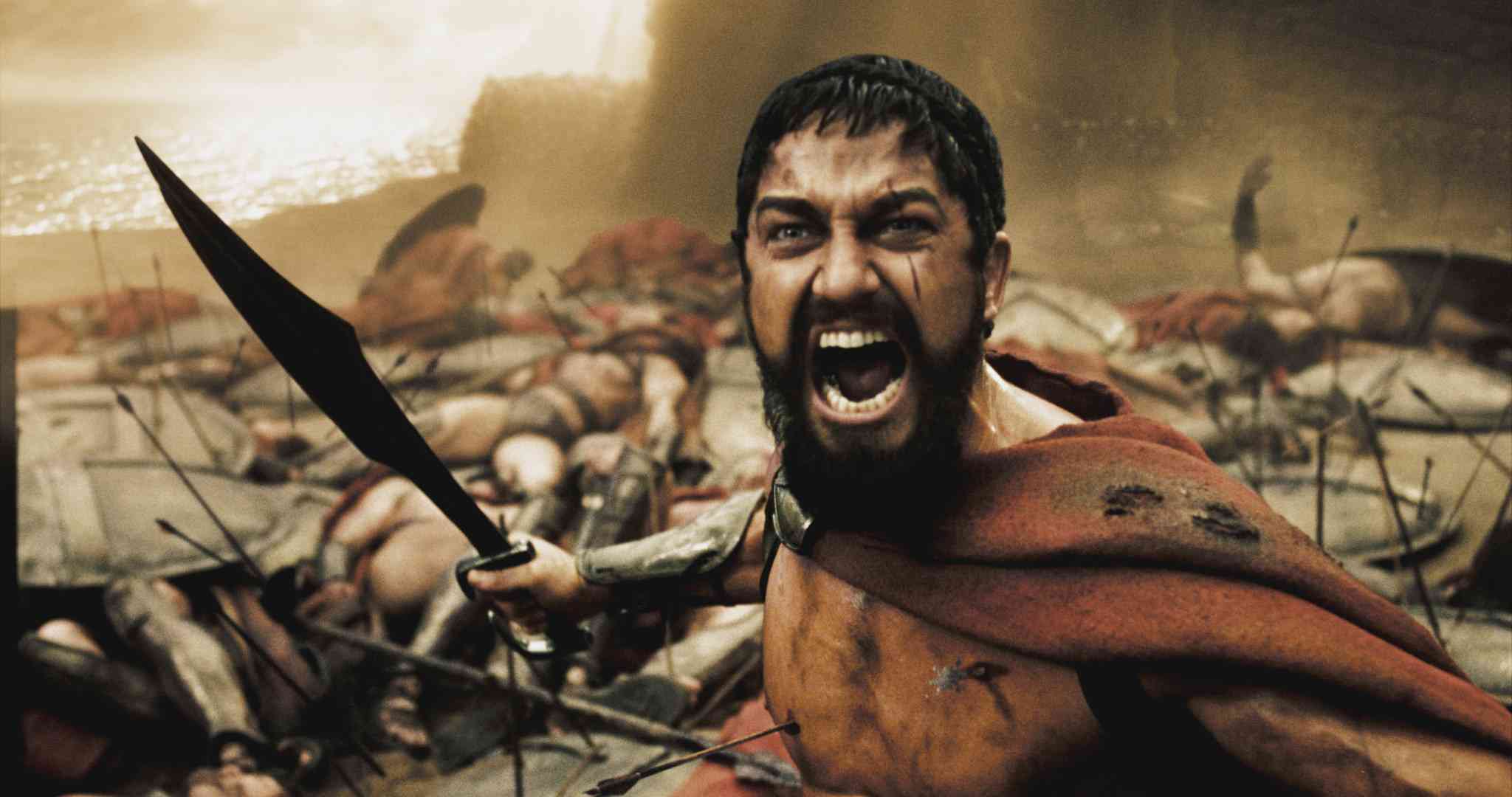
A totally accurate portrayal of Leonidas at the Battle of Thermopylae

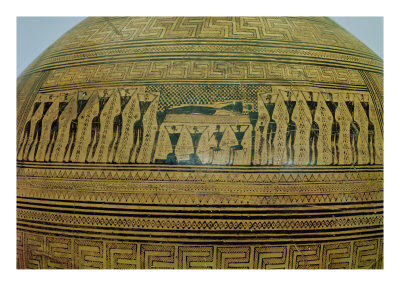
The period in Greek history between the C12th and C8thBC is known as the dark ages, due to the lack of writing to have survived, or seemingly been produced during this time period. Even the artwork became predominantly patterned and geometric during this period, allowing us no glimpse of the fashions of the day. Even by the C8th, the images we get are highly stylised and relatively simplistic. It isn’t until the C7th that we once again begin to find relatively realistic representations of the human form, allowing us to draw more detailed impressions of clothing.

The Dipylon Amphora, Funerary Urn in the Geometric Style from the mid-8th Century. About as useful as drawing a stick man in a fashion magazine


This period, from the end of the dark ages in the C8thBC until the Persian War in 479BC is known as the archaic period in Greek history. Here, some of the better known players of Greek history, namely Athens and Sparta, have come into play, as a couple of the many city states that are collectively referred to as the Greeks.

Significant changes had occurred to clothing by the beginning of the dark ages, with the fitted bodices being replaced with loose garments that were predominantly pinned onto the body.
 
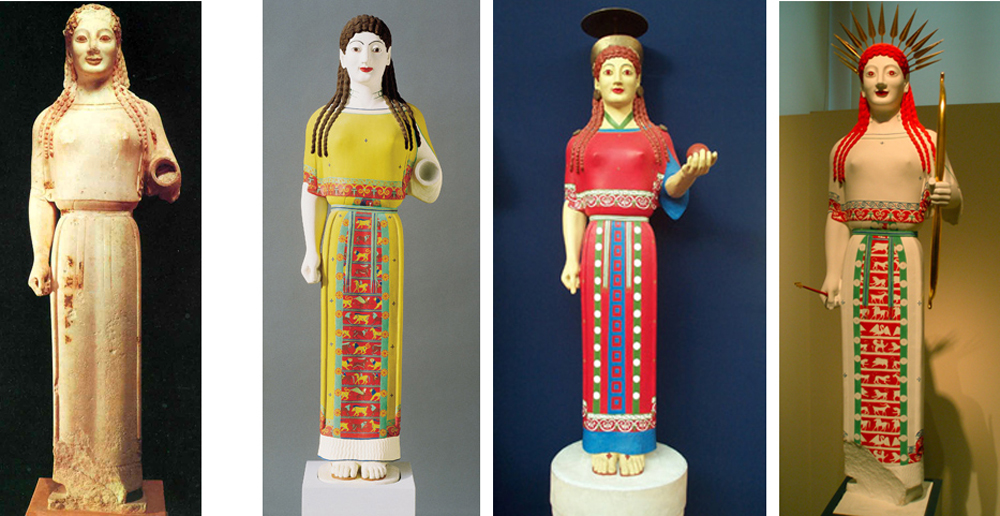
Peplos Kore (isn't she pretty) around 530BC, Acropolis museum, Athens

For women, the most fashionable garment in this period was the Peplos. This was a piece, generally of woollen cloth, that was wrapped around the body and pinned in place at the shoulders. To make it, a piece of cloth was folded in half, and the top was folded down, to create an overfold or apoptygma and then pinned in place at the shoulders. The open side could be sewn up, by often it was left open and the garment held in place by a girdle at the waist, which helped to take some of the weight off the pins.


Artemis, from the Francois Vase

The peplos has commonly been described as poikilos, or worked in many colours so it seems clear that the garment was a colourful and presumably patterned one. Indeed, on pottery, the peplos is most commonly seem covered in repeating geometric patterns that echo similar eastern designs such as those from Phoenicia. However, this was only for the rich, for the poorer members of society and slaves, the peplos would most likely been made from plain colours or undyed woollen cloth.


Some examples of the Peplos Kore restored to how she may have looked when she was colourful.

The peplos was teemed with a linen shawl referred to as a himation or a kredemnon, that was worn seemingly at the wearers discretion, being draped around the body and possible covering the arms, head or face.
The Berlin Standing Kore, 570-560 BC

Unlike the women, clothing for men appears to have consisted of a sown tunic, known as a chiton. This was a piece of cloth sewn into a tube and then pinned or sown over the arms, creating sleeves. The elderly and the wealthy wore ankle length chitons, while thigh length and belted was the predominant trend amongst those participating in physical activity. The majority of the time, a chiton was probably made of linen, but sometimes the warmer and cheaper wool would have been used.

Gorgon from dinos by the Gorgon painter, 600-550BC

Traditionally, men would also wear a cloak called either a himation or a chlaina, which was wrapped around the body, sometimes in place of a chiton. This cloak would have been woollen and was worn by all levels of society, although the quality of the materials varied drastically.
 

Achilles and Penthesilea, painted by Exekias, circa 540-30 B.C.

Another option for men was the zoma, or loincloth, that appears to have been worn primarily by athletes and warriors under their armour. Unfortunately, for the fashion minded, much of the art of this period aimed to depict the perfect man, to the ancient Greeks a young male athlete, who according to custom, would be naked.

The 'Gorgon Painter's Dinos' Pot design from Etruria c.580 BCE .

Overall, archaic fashion is very easy to achieve for yourself. All you need is a large rectangle of fabric, two reasonably large pin and a belt. The peplos and the chiton can be good costumes for parties (or re-enacting books of the Aeneid, while being wrapped in a bed sheet).  Although my love for this period does stem from my love for the art, I do like the fashion, especially the women's, even if I remain unconvinced that woollen cloth was the best thing to use in the climate of Ancient Greece.

 Eleanor


Pictures:


http://www.richardcrouse.ca//wp-content/uploads/2013/08/butler-leonidas-300-kopis.jpg
http://cache2.artprintimages.com/lrg/13/1347/QJES000Z.jpg